Made for one child
Materials are built around this child — their family photos, their favorite things — never pulled from a one-size-fits-all box.
For nearly twenty years I've walked alongside children with autism, speech and language differences, and complex developmental needs — in Ukraine, Poland, and now the United States. One child, one connection, one word at a time.
A little about me
I was born in 1986 in Drohobych, in the Lviv Region of Ukraine. My grandfather gave his life to education — helping build schools across the region and working for many years at a boarding school for children with special educational needs. My mother worked there too.
So from very early on, I was around those children. I saw how much they wanted to be understood, and how often the words simply wouldn't come. That stayed with me, and it became my life's work: to build ways of communicating that help children express themselves, grow more independent, and take their place in the world.
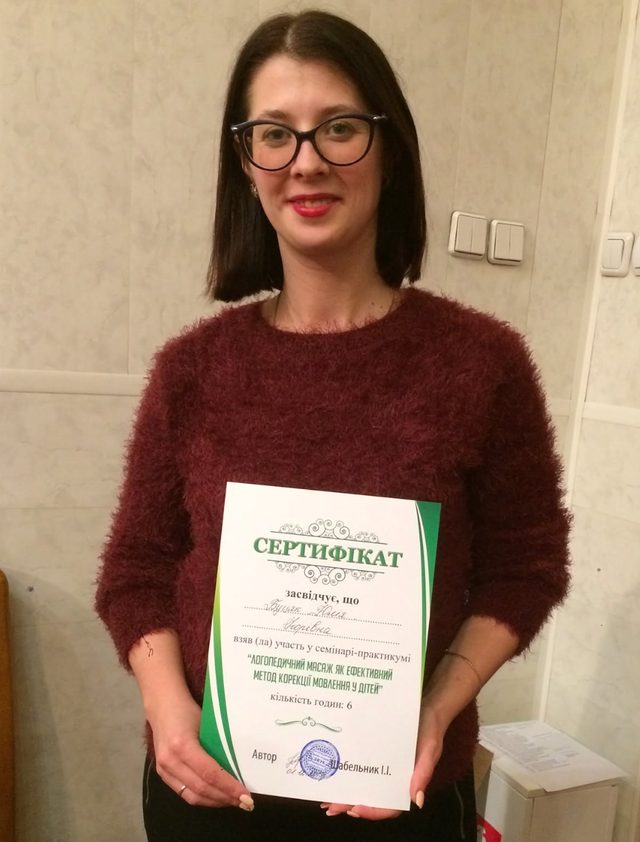
I qualified first as a practical psychologist, then as a speech-language pathologist and special education specialist, focusing on alternative communication and children with Autism Spectrum Disorder and significant speech differences. I went on to the Master's program at M. Drahomanov Kyiv University, Faculty of Special Education and Speech Therapy.
“I don't ask a child to fit my plan. I start with what makes them curious, what makes them comfortable, what makes them want to join in — and we build from there.”
Trust comes first. A child who feels safe and genuinely enjoyed is a child who starts reaching out. Everything else grows from that.
The methodology
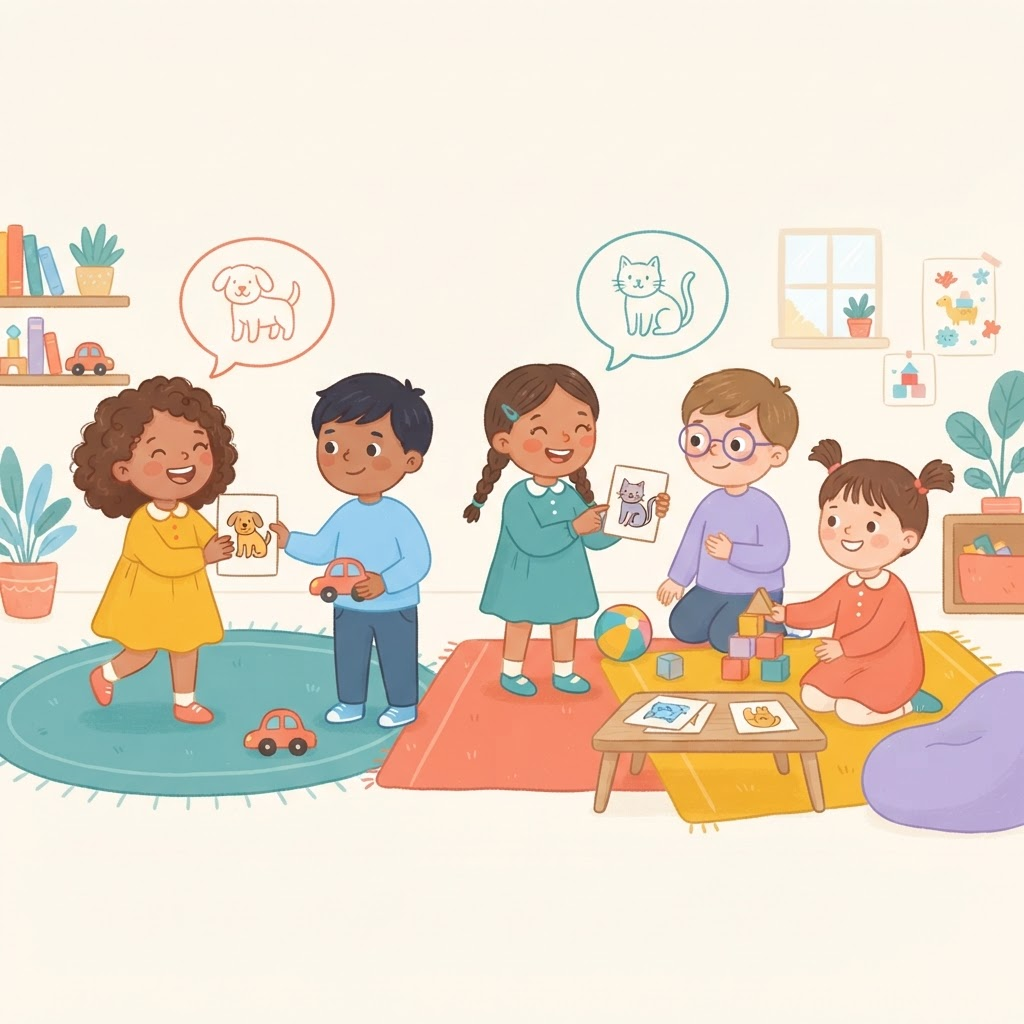
Children begin with something they can hold and point to: a photograph, a picture, a card. From there we travel together toward words, phrases, sentences, and — when the time is right — writing. For children who don't speak, it opens a door to asking, choosing, and being heard. For children who do, it builds structure, confidence, and independence from prompting.
Materials are built around this child — their family photos, their favorite things — never pulled from a one-size-fits-all box.
A car, a ball, a person they adore. Motivation is the easiest doorway into communication.
Families get guidance and real support, so the progress made in sessions carries into everyday life at home.
Qualitative speech markers and a percentage-based measure of phrase-speech development, used to track real progress.
Photos, objects, actions, colors, words, sentence templates and removable strips a child can move around to build their own sentence.
Used alongside visual communication, DTT, ESDM, TEACCH, speech-language therapy, occupational therapy and sensory integration.
How it works
Stories & progress
Across my practice, families have seen growth in speech and language, in building phrases and sentences, in asking and answering, in everyday independence and adaptive skills — and real drops in the frustrated behaviors that often come from not being understood. Some children who don't speak have gone on to write words and messages independently, sometimes on a tablet.
I met a non-speaking little boy with Autism Spectrum Disorder when he was about four and a half. He's thirteen now. We began with single visual cards, and slowly moved through words, phrases and sentences until writing became another way for him to tell us what he wanted, needed, and wondered about. His mom sat in on sessions and learned to carry the work into ordinary days. When distance came between us, we continued online for around four years. Long-term, patient, side-by-side with the family — that's what made it possible.
All case descriptions are anonymised. Videos and photographs are only ever shared with parents' permission.
The road so far
2006 · Ukraine
Invited in my third year of university to work as a tutor at a specialized boarding school, with a class of seven children with complex developmental and speech needs. They taught me that no single method fits every child.
2011 · Ukraine
Opened my own developmental and corrective practice, focused on children with complex needs including autism and significant speech difficulties — individualized programs, materials, and communication systems. Volunteer work for families who needed it alongside.
2018 · Ukraine
Returned to that same boarding school as practical psychologist and special/corrective education specialist, this time supporting children psychologically, educationally and developmentally all at once.
2023 · Poland
After the war began, my family and I relocated. I founded the psychological and speech-language practice "Gala," and kept developing the methodology in a new language and a new setting.
Sept 2024 · United States
Today I work as a tutor and behavioral support assistant in American preschools, with both typically developing children and children with special educational needs — helping them communicate, play, and belong together.
For parents & colleagues
Individualized communication books, visual cards, photographs of familiar people and objects, sentence templates, removable sentence strips, written markers.
Practical guidance so families can keep communication growing between sessions — because most of a child's day happens at home.
Functional communication, children who don’t speak, autism, AAC, visual and written communication, phrase-speech development, independence and social participation.
My hope is a warm, community-based center offering communication programs, parent support, workshops and outreach for children and families with developmental differences — a place where research and everyday practice stay connected.
Whether you're a parent wondering where to start, a teacher looking for ideas, or a colleague curious about the methodology — I'd love to hear from you.